Sunday, March 27, 2016

#HumanWildlifeConflict - Using the right people and technology to save lives...


In life there are the right times to smile and the right times not to...

CASE STUDY - Sabitri Paudel is in a very bad state of mind nearly five years after her four year son was killed by a leopard.  It's a tragic story, Sabitri and her husband Shiva soon moved away from the small village where the event took place.  They now live quite close by to where I'm writing this but the village isn't far away, leopards still roam, attacking livestock and the memory of that terrible day is still strong for the people living there.

In this particular case there had been leopard attacks on people in the months before the leopard took the little boy.  I'm not going to go into further detail now because this is an ongoing study and one of several cases being used to increase understanding.  This understanding is in parallel with action as we test and implement strategies for human - wildlife conflict mitigation.  The leopard, a species having no choice but to make serious behaviour modifications because of human induced changes to habitat, is our focus.  Understanding leopard behaviour, I have to admit it consumes me.

Technology is a major part of the strategy.  Here Batgirl Bidhya tests two different types of camera.  One can send a message to devices so that real time data can be used to deal with conflict and wildlife poaching situations, all part of the scope I'm working long hours on at the moment.  Bidhya is smiling, she smiles a lot, her friends tease her because at a young age she already has "smile lines"... but Bidhya has a very serious side as well.  Her dedication to the issues we're working on is fantastic, she has poured many hours into helping me directly as well as other projects.  Technology is extremely important but having the right people, with the right balance of skill, passion and determination is vital.

Saturday, March 26, 2016

In the background a leopard, in the foreground a dangerous legacy...


In conservation the still image is a very powerful tool.  To be honest, if things were different I would purely work as a conservation photographer but I'm too deeply involved in project development for that to happen.  Sometimes I get irate when people use my images without my permission, most people have no idea the amount of work it takes to get these images, some real sacrifices in tough conditions.  I usually need to attach the right words to images to complete the story, I don't feel inconsiderate use of another person's images is fair, I don't do it, why should they...

Soon you'll see more visibly a collaboration with a wildlife conservation journalist who like me has a strong interest and concern in humanitarian issues.  We'll be presenting a strong human element with regard to human-wildlife conflict as well as going in depth different aspects of the whole human and wildlife relationship.  Various other people connected to WildTiger will be involved, hand picked because they show the right amount of compassion to both sides of the story.

As I've mentioned getting the right information including images isn't easy and nor is the task of applying them to the action to develop projects.  I look for people with the right motivation and who really know what it takes.  So many ask me "Oh I want to get into something like tiger conservation, how do I do it?" ... my answer is sometimes something like "go and have a couple of kids and realize this thing is not about you" ... I'm being flippant of course, the last thing I want to do is encourage indiscriminate breeding and increasing the population of a species which really doesn't need adding to very much, well, you know what I mean... but the need to understand that real conservation work is hard, for virtually no financial gain and often a lot of time away from loved ones.

But just really understanding the issues is so important, it drives real action.  One of the most touching things for me in the last couple of years was a woman in Italy, she quietly went about and held a photo exhibition in her house using some of my images I sent her.  She raised funds for our work, she certainly raised my morale.

In the first image you can see one of our human legacies, our destruction of the habitat of other living beings.  Of course I have thousands of images of pristine environment as well and it is important to present images and stories with balance, to present the issues, what we are trying to do about them and also to bring hope ... because there is hope, the true conservationists wouldn't do this if we didn't believe that...

Tuesday, March 15, 2016

The only #CONSERVATION answer - #COMPASSION for both #people and #wildlife...

These posts are also at Facebook (along with other updates) should you wish to comment

#

Being judged because of your skin colour is never easy.  Those who have experienced it know what I mean.  Having rhino skin is not even enough armour because racism also separates real friendships from the pseudo, they can be tough moments.  My book will tell more...

The positive I try to take is that it teaches you a lot about the marginalized.  Being at the bottom of the social heap, as occurs in some cultures by traditions based on beliefs, in others by the economic divide, can mean a victimization that leads to some dangerous consequences, for man and animal.  Interviewing a person who has lost a child in a leopard attack brings that home.  Seeing the fear in a leopard during a rescue brings that home.

It's at those moments that to truly understand one can take past experiences and realize what a marginalized person or animal is going through.  A  true conservationist has to show compassion for both people and wildlife.  It can sometimes mean tough love because yes, poachers and wildlife dealers do need punishment in many cases but victims of wildlife conflict and wildlife crime are marginalized in a way where they had no choice.

Unfortunately there are those in the conservation community and outside it who don't understand this.  That needs to change...

Monday, March 14, 2016

Responsible wildlife reporting... think before you tweet!


Had a lot of conversations with passionate concerned people about this issue of late. Information falling into the wrong hands because of irresponsible reporting by media, organizations and individuals can do real damage... poachers and wildlife dealers can read believe it or not! We tweeted our concern at @WildTigerNews on this yesterday, we're putting together an article on the subject. Yes, some news to be made public but irresponsible reporting can lead to criminals gaining knowledge of locations as well as actively encouraging wildlife crime... too much noise is a bad thing for wildlife, in many ways...

Saturday, March 12, 2016

Big cats evoke many feelings for many people but there is one raw reality


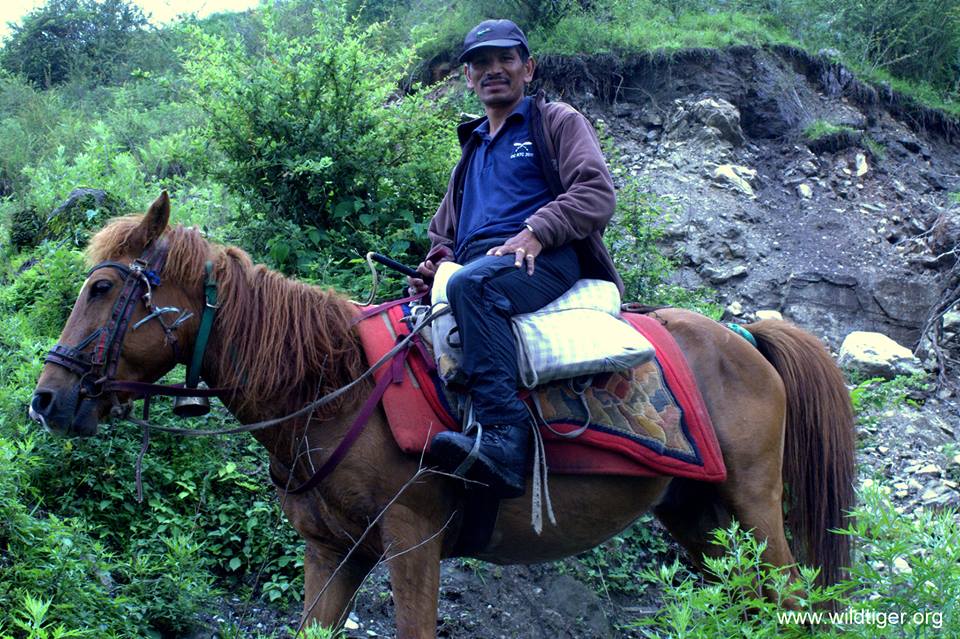
Over the years I've had a lot of conversations about big cats and wildlife in general, thousands I guess.  Project work requires a lot of extraction of information combined with the physical element of hundreds of kilometres of walking, often up very steep slopes.  Sometimes I can go a few days without talking to anyone, sometimes there can be long conversations deep into dark early morning hours discussing strategy.  It can mean talking to policy makers, it can mean off the cuff conversations in the middle of nowhere when a friend on horseback appears.  Sometimes I need to wait until prayers are finished while at other times it can be an online conversation when a tweet provokes someone into action.

Big cats evoke a lot of different feelings, so varied among many different people.  There is love, there is hate. There is joy, there is tragedy.  There is indifference, there is passion.  There is bullshit, there is action.  I document as much as I can, constantly learning.  The more I find out, the less I know...

Yesterday I made a couple of posts online, the first being my blog about how information regarding wild big cats has to be carefully managed, there are serious security problems if information falls into the wrong hands.  The second post was a link to a BBC Earth article about why people poach endangered animals.  On some forums it evoked nothing, on others it evoked a lot of feeling.

For me it evokes one simple raw real conversation.  Quite simply we are working our guts out to hold the situation as best possible until there is a major wake up and the world finally addresses poverty.  By poverty I don't just mean money in pockets, I mean the wealth of mind through education, the wealth of body through adequate health care.  Right now I'm frantically raising funds so the son of a friend can have his life saving operation paid for, something I shouldn't have to be doing if there was a decent system in place.  Over the next week I go into long hours for the wildlife rescue and conflict mitigation practices desperately needed here, based around the leopard but extending far beyond.  These are issues that in 2016 should have been addressed a long time ago but the sheer fact this nation is impoverished in policy, mind and for many millions financially, it means this constant battle.

Often I feel caught between two worlds.  There is the over consuming west which has done incredible environmental damage.  Then there is the under performing areas like this one, ironically wanting to go down the same path as the west but in general not motivated enough to pick up the ever growing rubbish being tossed on the ground.

I feel that somewhere between the two worlds is some sort of truth and hope, the raw reality that yes we can get it right.  I wonder how the big cats see it because despite our many different attitudes towards them they too are caught in the middle of all this, facing their own raw reality.

So despite all the different attitudes we must continue to work as hard as hell until that wake up eventuates.  At the moment I hear a lot of people talking about it but as I settle into a long day's work ahead it would be good to see more of that talk turned into action... Jai Bagh.


Friday, March 11, 2016

Keeping big cat info, locations private because of safety risk..

This blog is published at Facebook (along with other updates) should you wish to comment.


This is a tricky one and it applies to wildlife in general especially the species at the most risk from poaching.  How much information is too much information? When does making this information public actually put wildlife at risk?  It's a fine line.  I've noticed that some orgs will publish anything they can, even if it wasn't their directly researched information, to gain attention and funds.  The wildlife tourism industry also in the same boat.

There is no straight forward answer except that the situation has changed significantly enough that the question has to be asked and constantly reappraised.  As I write this, right now, images are being sent to me by a colleague, a tigress and four cubs at a well known and highly protected location... but a part of the world that has a big cat poaching problem right now.  Just a few days ago a villager here in the Kaski contacted me about a leopard living nearby but he had told no one, he knew the risk.

Poachers connected to organized crime use technology just as up to date as that used by people protecting wildlife.  The battle now involves a lot of high tech tools on both sides.  Information hitting public platforms can turn out to be aiding a death sentence.

I've written before expressing my concerns about how we "over intrude" on wildlife.  I'm saying here that the consequences can be deadly.  We've just tweeted at @WildTigerNews along those lines.  The news has to be accurate and verifiable but there is also the question as to if publishing it can have negative effects.  Big cats need their privacy, now more than ever...

Thursday, March 10, 2016

The brutal truth: Recent tiger and leopard skin seizures the tip of the iceberg...

These blogs are also posted at Facebook (along with other updates) if you wish to comment.


If you're into fluffy cute stuff don't read these blogs - this is more of a place for people who want to know raw reality.  Some of you may have seen the post yesterday at our Twitter feed @WildTigerNews regarding leopard skin seizures in the far west.  Those of you who follow more closely (I mean actually read posts) will know there's been a spate of seizures, big cat bones and skins.  Not every seizure gets reported in the media because that can hinder investigations.  And of course, as I've mentioned several times before, there's the frightening fact that for every seizure made there's a lot of illegal trade in big cat body parts that slips through the net.

Illegal Wildlife Trade is a multi billion dollar problem.  Although China and the USA stand out as the main destination points for both live and dead wildlife, the problem is global, every nation is involved.  I guess it's an indictment of our fucked up attitude to wildlife, we cage, we kill, we both love and hate it to death.

The situation here in Nepal is a microcosm because the link between the trade and economic factors is in your face.  Poaching is at all levels, whether it's to make a bit of money from bush meat to trade in the high ticket items such as big cat body parts. There's no doubt that the economic downturn in an already struggling country is a major factor in the poaching spike, the earthquakes and border blockades badly affecting tourism as well as causing so much hardship.  I wrote how these events would threaten wildlife security and well, I don't want to say I told you so but I told you so.

We live in an age now of "awareness spreading" and endless meetings.  Meanwhile, at the pointy end, ground level, we are under resourced.  The link between human/wildlife conflict and poaching/illegal trade is becoming a greater tangible, especially in the case of the leopard.  From my own point of view this has forced the changes we are making at WildTiger and where we place our emphasis because one thing the years have taught me is that humans are much more reactive than proactive... and this trait is a cost to wildlife, a big bad cost.  Human/wildlife conflict mitigation and anti-poaching have to be taken more seriously in an active sense, just showing a sad face about it achieves nothing...

I'll be in the west in just over a week after finalizing a few things here in the Kaski where we have many leopard conflict issues.  The issues I've been posting about recently lead to long days.  When there is time to reflect I can only shake my head and wonder how the world has let it come to this.

Now blogging at wildleopard.net - thanks for your support!

Many thanks to those who have been following this blog as well as prior to that The Asa Diaries and TigerTrek.  I'm now blogging a...